

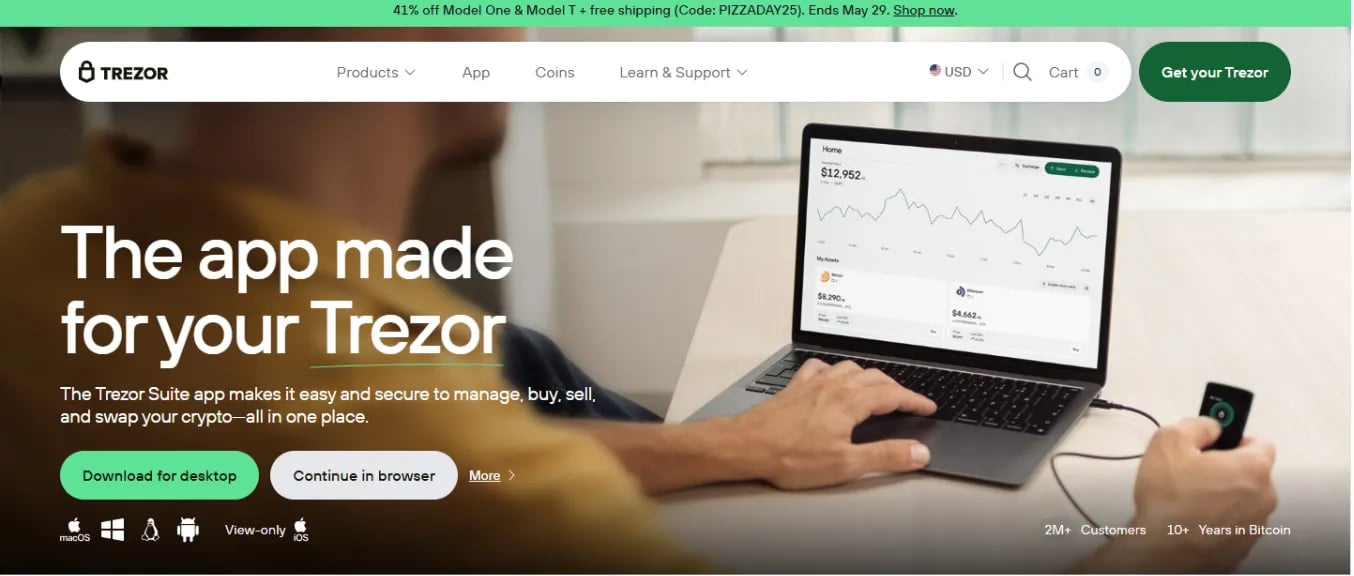
Trezor Suite
The digital economy is creating new ways for people to own, exchange, and manage financial assets. Traditional financial systems generally depend on institutions to maintain account records and process transactions. Blockchain technology introduces another approach, allowing individuals to interact with digital assets through decentralized networks. This development has increased the importance of personal cryptocurrency management. People are no longer interested only in purchasing digital currencies. They also want to understand where their assets are stored, how transactions work, and what responsibilities come with controlling their funds. Trezor Suite fits into this changing environment by providing an interface for managing cryptocurrency through hardware-based self-custody. Instead of treating a wallet as simply a place to view balances, it supports a broader approach to digital ownership.From Holding Cryptocurrency to Understanding It
Owning cryptocurrency involves several important responsibilities. Users need to understand blockchain addresses, transaction confirmations, network fees, account balances, and recovery procedures. Trezor Suite helps bring these elements together in an accessible environment. Through its interface, users can review supported cryptocurrency accounts, examine transaction histories, and prepare transfers. This visibility can make digital asset management more understandable, especially for people who are moving away from traditional exchange-based storage. The application also encourages users to become more involved in the technical side of cryptocurrency ownership. Rather than depending entirely on a third-party platform, individuals can learn how their hardware wallet interacts with blockchain networks.The Importance of Independent Digital Asset Control
Financial independence is one of the ideas behind cryptocurrency. Self-custody gives individuals responsibility for protecting their own wallet credentials and authorizing transactions. Trezor Suite works alongside compatible hardware wallets to support this approach. Private keys remain protected by the hardware security environment, while the application provides the interface needed to manage cryptocurrency accounts. This arrangement creates a distinction between viewing financial information and approving financial activity. For example, a user may prepare a Bitcoin transfer through the application, but the transaction must be reviewed and signed through the connected hardware wallet. This additional verification step helps prevent unauthorized transaction approval. Self-custody also means users must take recovery information seriously. Losing access to a device may be manageable if a valid recovery backup exists, but losing the recovery phrase can make restoring access impossible.Blockchain Transparency and Better Financial Awareness
One of the defining characteristics of public blockchain networks is transparency. Transactions recorded on supported public blockchains can generally be examined using network explorers. Trezor Suite helps users interact with this environment by displaying account activity and transaction information in a more convenient format. Understanding transaction history can be useful for several reasons:- Reviewing previous cryptocurrency transfers.
- Tracking incoming and outgoing payments.
- Checking transaction confirmation status.
- Understanding network-related costs.
- Organizing different cryptocurrency accounts.